Slurpee Design System
7-Eleven had a design system built for one app and fifteen apps that needed one. I rebuilt it from the ground up.
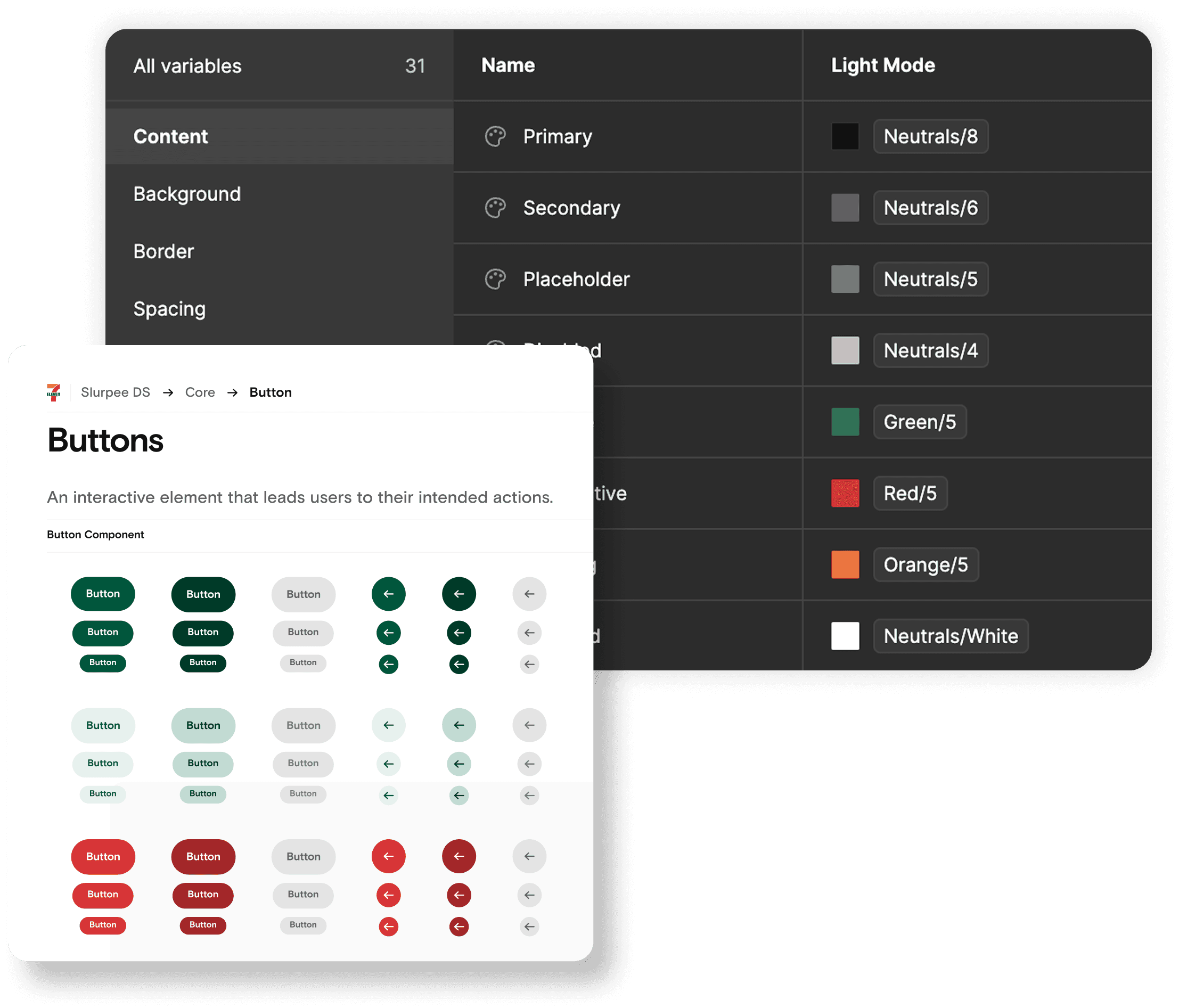
Where it started
The original system grew out of a redesign of the main consumer app. I was the sole designer. I built it, maintained it, and documented it with limited resources. It predated Figma variables and properties, so it ran on component variants. It worked, but it was brittle.
What broke
It was built for one app. Other teams needed their own solutions. They detached components. They built one-offs. The Figma library filled with unused components. Design drifted. Engineering duplicated work. Velocity dropped.
What I did first
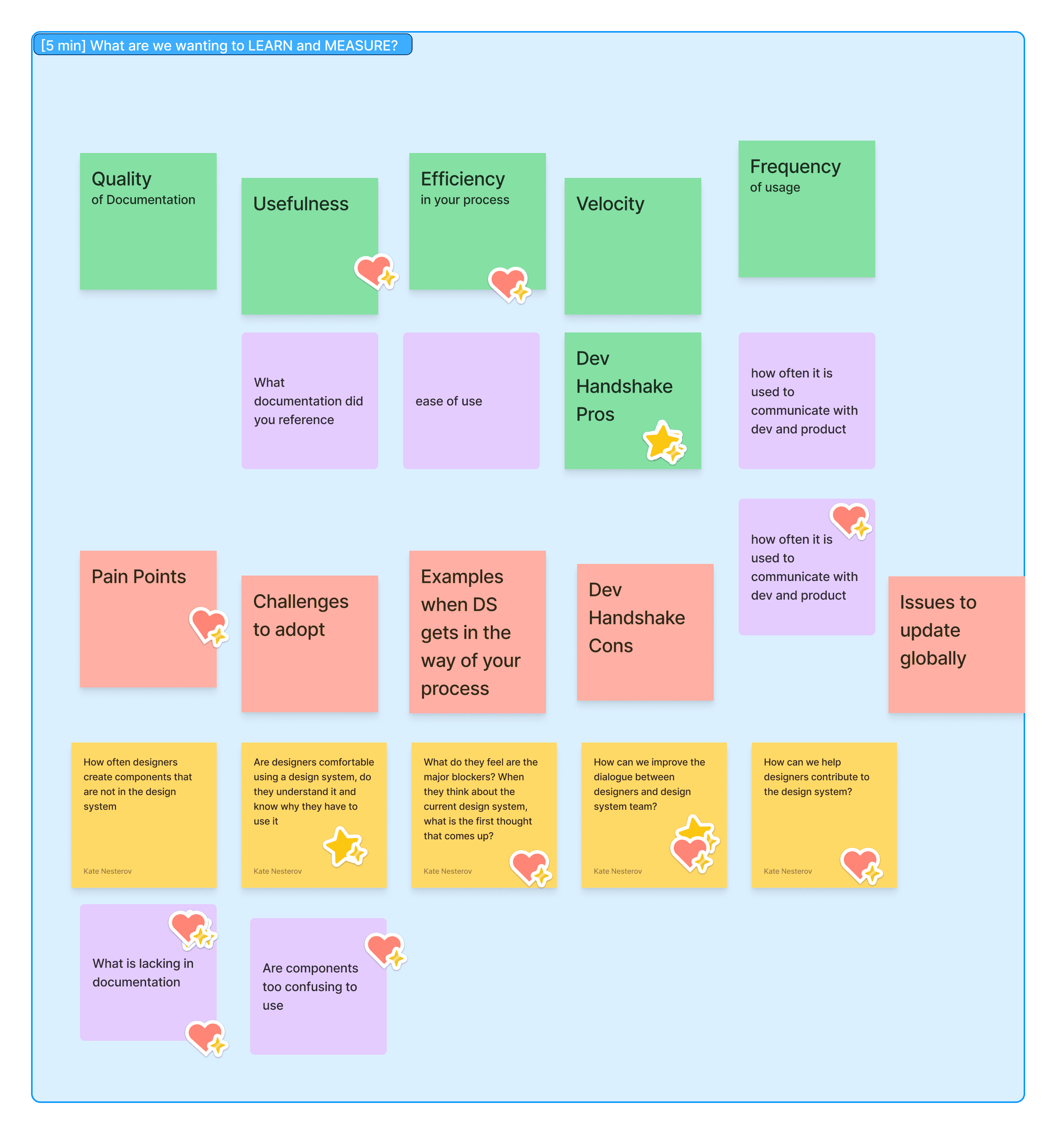
I started with my own assumptions about what worked and what did not. Then I tested them. Surveys. Interviews. A full audit of the libraries. The audit confirmed the worst of it: components that did not work across apps, components too complex to use, and a library full of dead weight.
The architecture
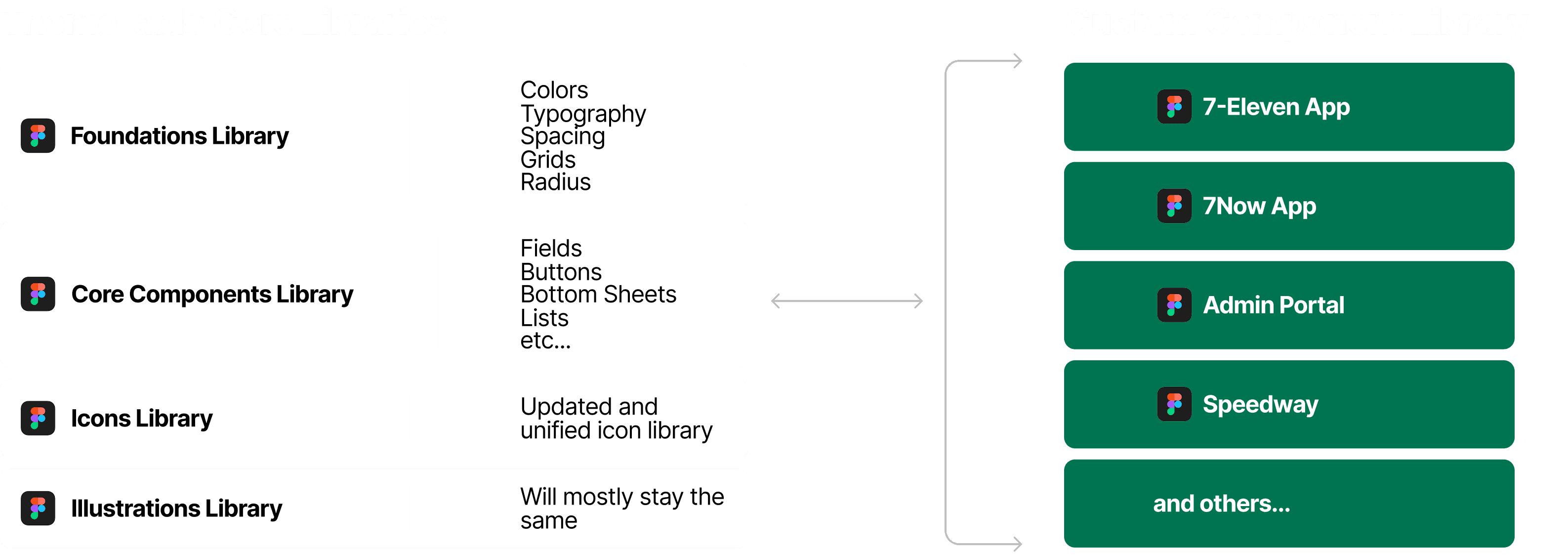
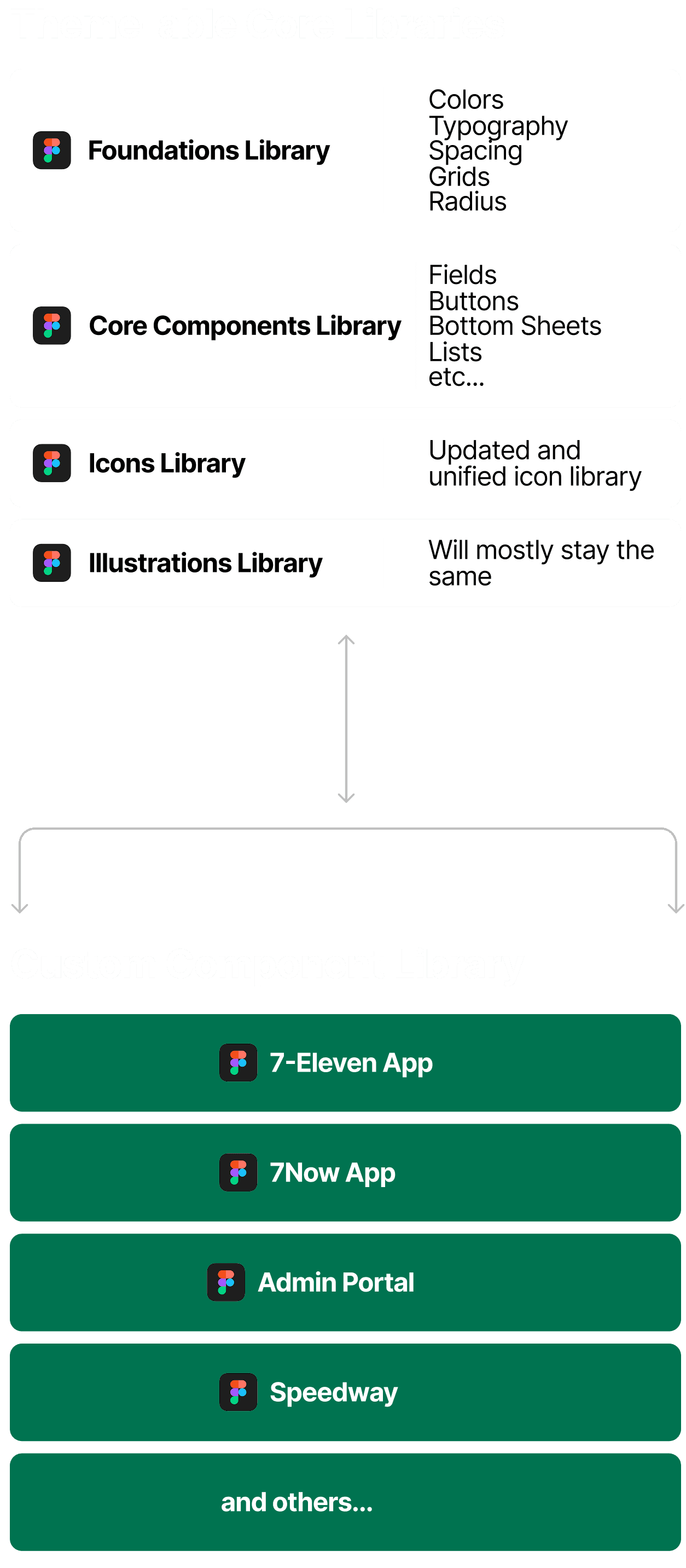
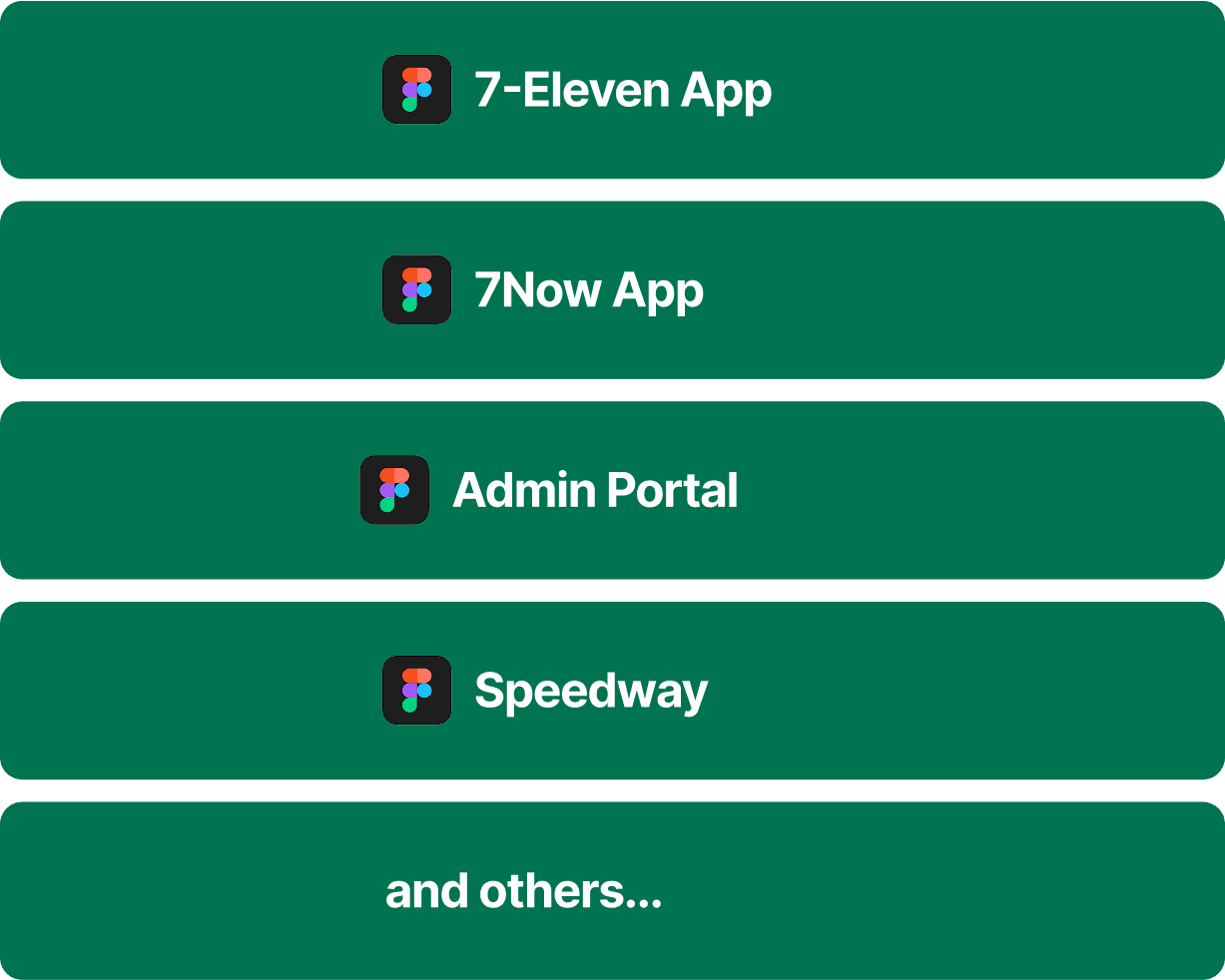
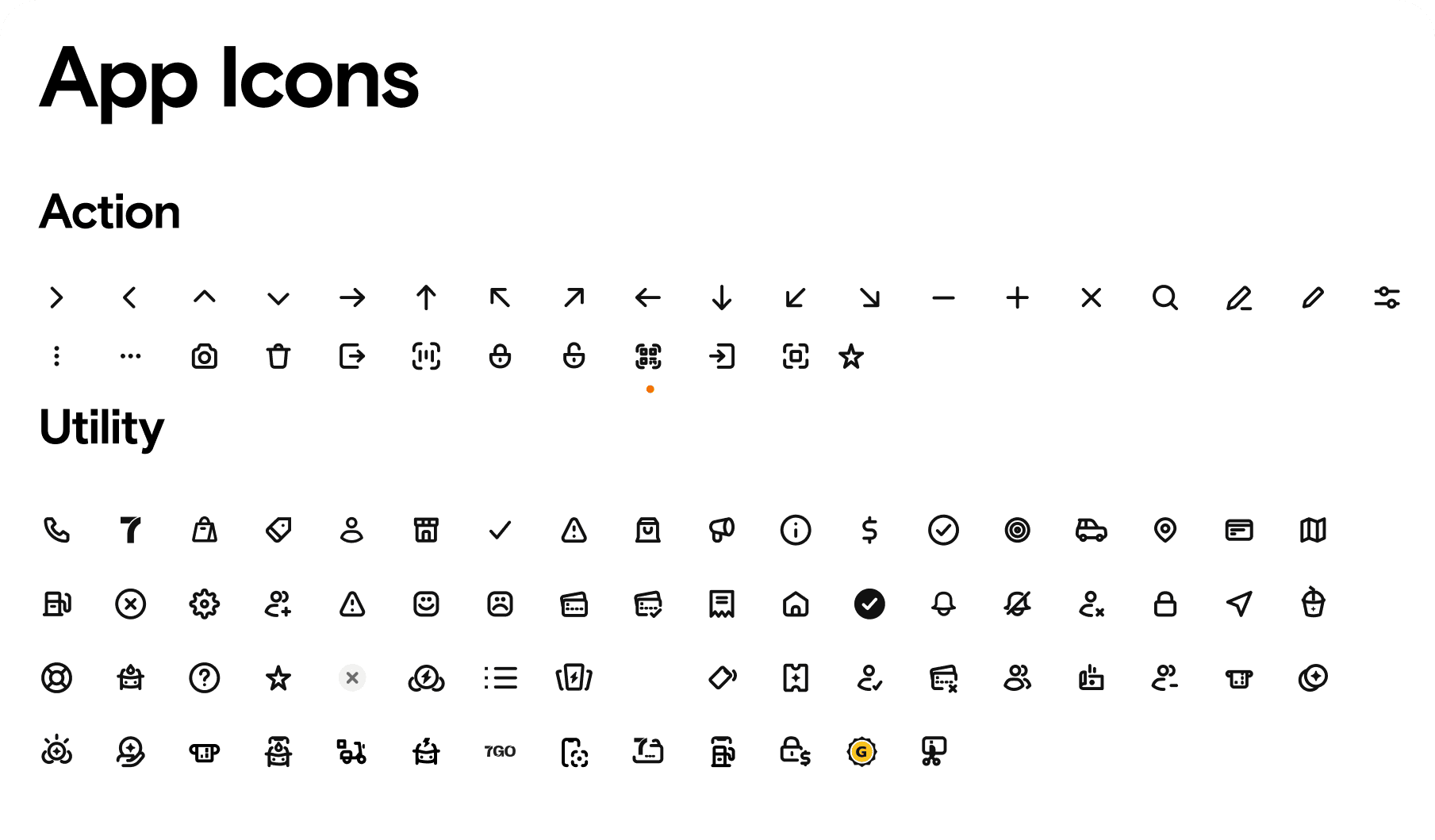
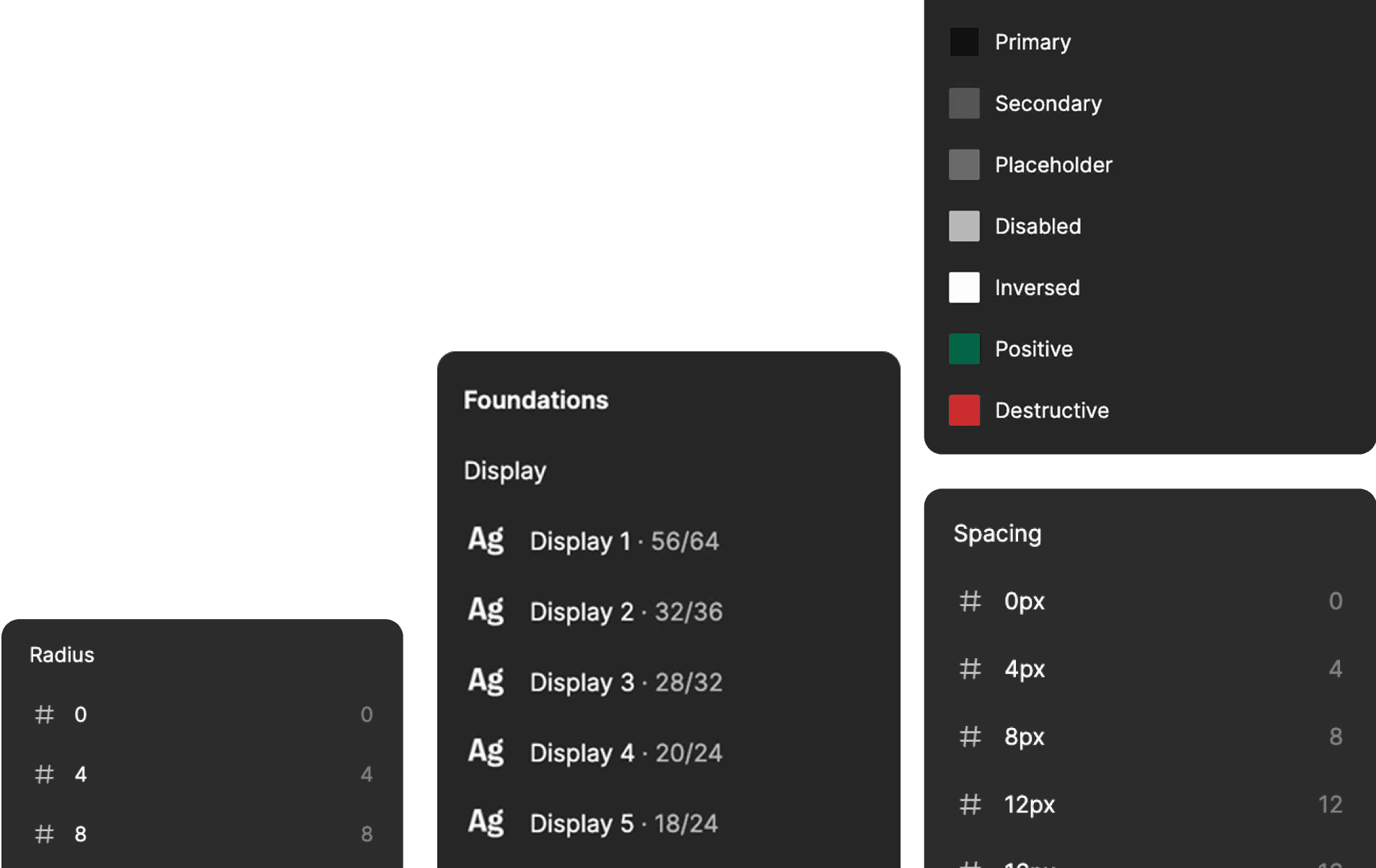
Two layers. Core libraries hold the foundations: text styles, core components, icons, assets. Every app uses them. Domain libraries sit on top. Each app gets its own library with its own theming: colors, spacing, corner radius. Plus components only that app needs. Nothing app-specific leaks into core.
Adoption, not enforcement
The Speedway app was the first proof. I trained their designer to build app-specific components with Figma variables. They got independence. The system kept its integrity. That pattern scaled.
The intake process
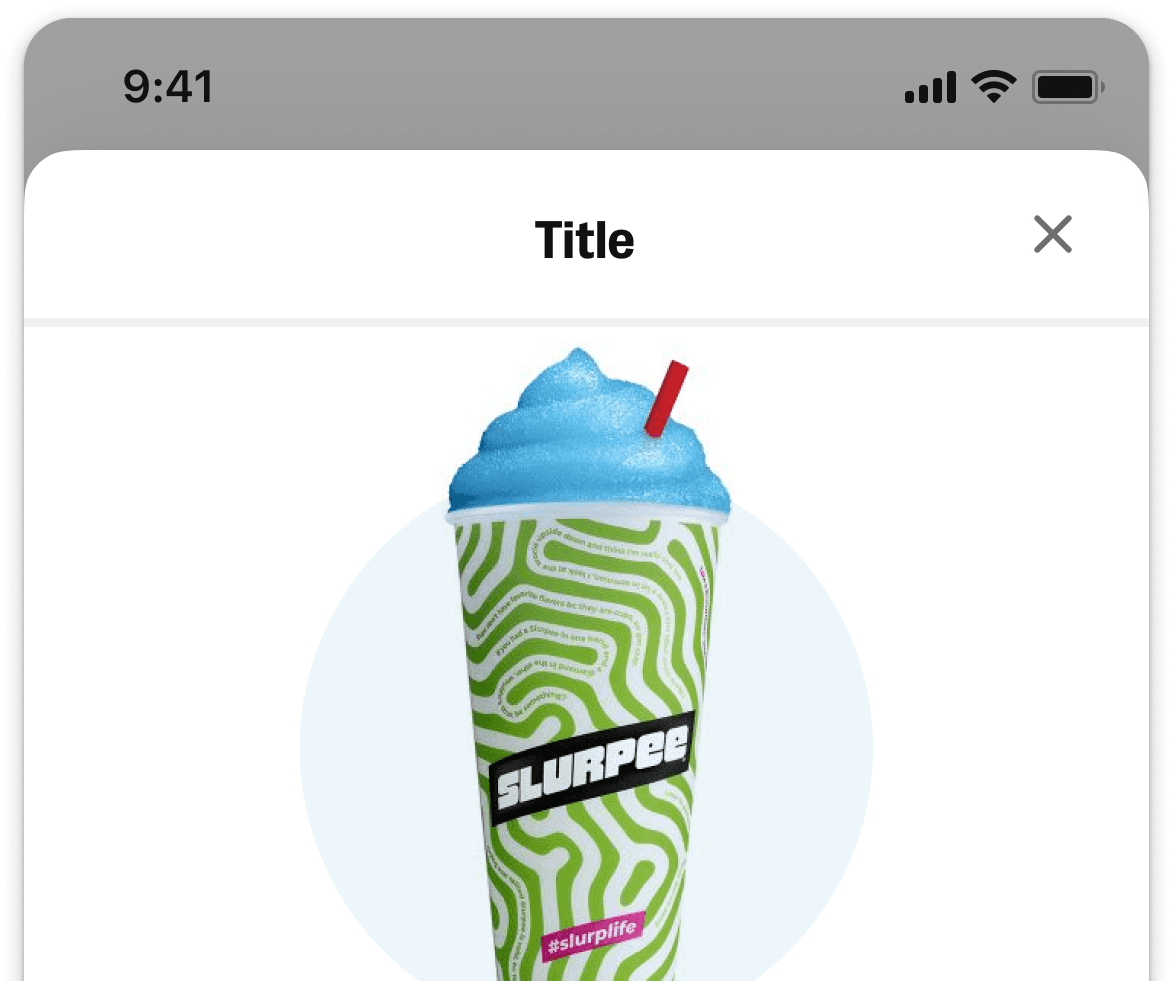
Designers submit a short form for new or changed components. We review it in a standing meeting. Accepted work goes to a backlog. Core components are handled by the design ops team. App-specific ones are handled by app teams. Everything gets a final check for construction and accessibility before it ships.
What changed
Teams adopted the new system faster than I expected. The Speedway app launched on a tight deadline with full brand consistency. Enterprise products migrated. Component simplification drove adherence: better consistency, faster development, shorter time to market. What started as one app's design language is now the foundation for 7-Eleven's digital presence.